
Not Only Indonesia, Chinese Soldiers Also Went Down to the Rice Fields

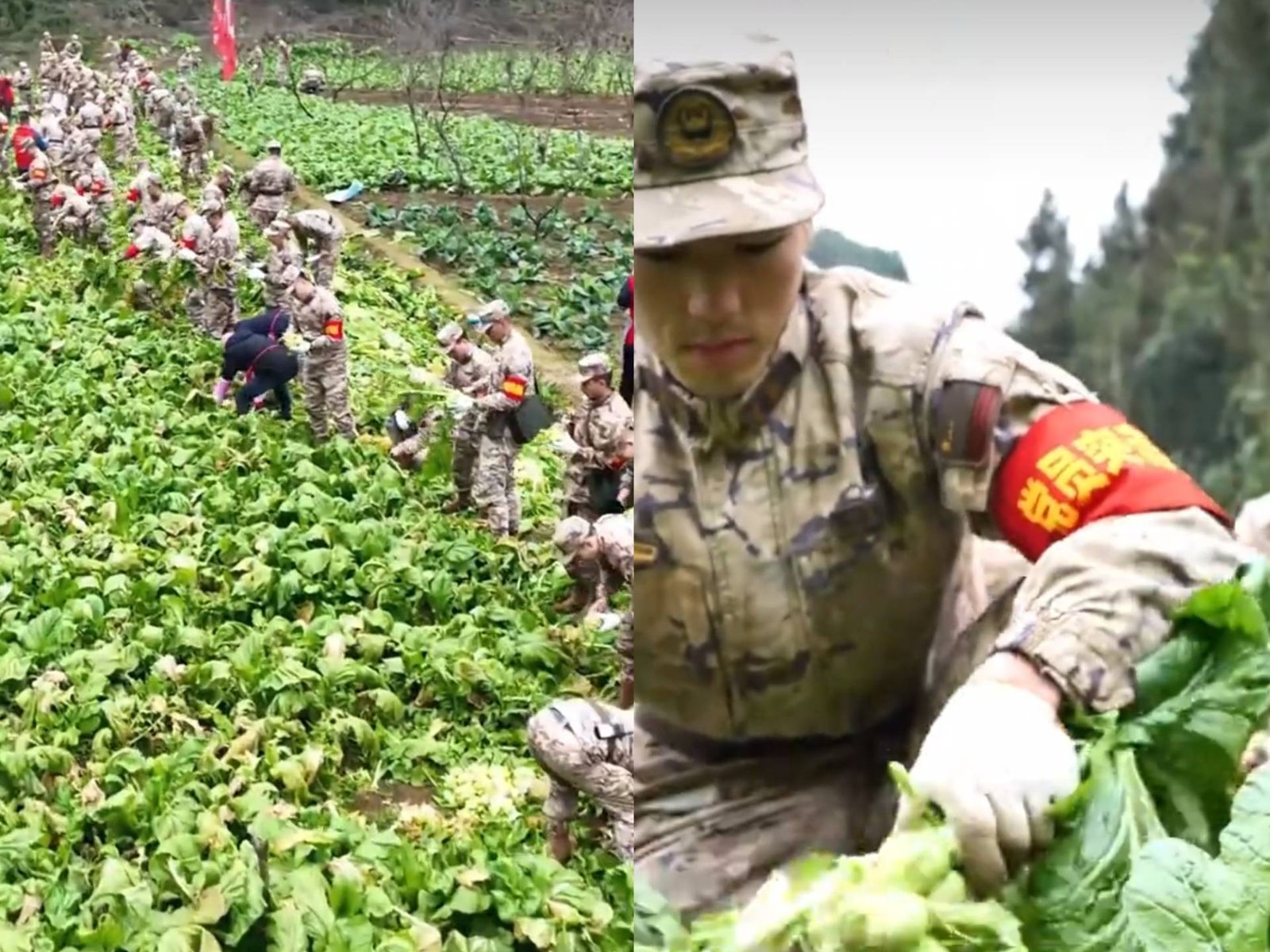
Recently, the involvement of Indonesian National Armed Forces (TNI) soldiers in food security programs through farming activities and supporting farmers has attracted public attention. However, a similar concept has long been implemented in China.
The Chinese People’s Liberation Army (PLA) has a decades-long tradition of farming. For China, the ability to produce food independently is a crucial part of its national defense strategy.
Here are some reasons why the Chinese military is also equipped with farming skills.

Starting from a History of Struggle

The tradition of farming in the Chinese military has its roots in the events in Nanniwan in the early 1940s. Facing an economic blockade, the Chinese Communist forces struggled to obtain logistical supplies.
To survive, soldiers were ordered to cultivate vacant land and grow wheat and vegetables to meet their own food needs. This policy became known as Shengchan Ziji, or self-producing to achieve self-sufficiency.
Since then, farming skills have become part of Chinese military culture and history.
Having a Special Military Corps Specializing in Agriculture
China also has a semi-military organization called the Xinjiang Production and Construction Corps (XPCC), or Bingtuan.
This corps is comprised of military personnel and veterans who have the dual task of guarding border areas and developing large-scale agricultural areas.
They manage various commodities, from cotton and wheat to fruits and vegetables, as part of efforts to support national food security.
Growing Vegetables at Remote Posts
Farming skills are also applied at various military bases located in areas with limited logistical access, such as the Tibetan Plateau and remote islands.
To meet food needs, soldiers build greenhouses and utilize hydroponic technology to continue producing vegetables year-round without relying entirely on external supplies.
Bringing to UN Peacekeeping Missions
Farming skills are not only applied domestically. Chinese military personnel participating in United Nations (UN) peacekeeping missions are also equipped with farming skills.
In several deployment areas in Africa, Chinese troops utilize vacant land around bases to grow various types of vegetables, such as tomatoes, cucumbers, and celery, to meet personnel’s nutritional needs while on duty.
Part of a Defense Strategy
For China, food security is part of its national defense system. The ability to produce its own food is considered essential for maintaining troop readiness in the face of emergencies, conflicts, and supply chain disruptions.
This concept also aligns with various food security programs involving the Indonesian National Armed Forces (TNI) in Indonesia. While their approaches differ, both demonstrate that modern defense relies not only on weaponry but also on the ability to maintain logistical supplies, including food, under various conditions.