
China’s Viral Pregnancy Robot: Fact or Hoax?

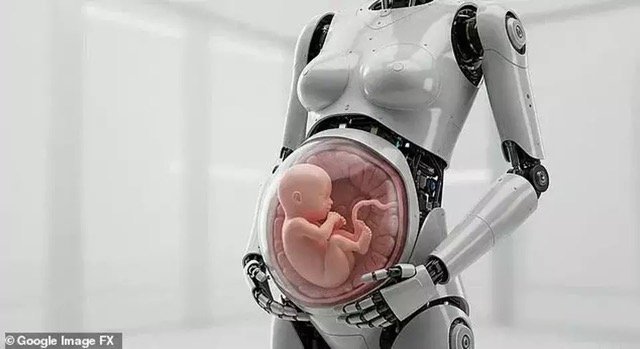
News about the development of a “gestation robot,” or humanoid pregnancy robot, in China has recently circulated widely and sparked global debate. The technology is claimed to be capable of carrying a human fetus through an artificial womb until delivery, complete with an automated nutrient delivery system, resembling a natural pregnancy.
The narrative alleges the project is being developed by a company called Kaiwa Technology in Guangzhou, China, led by scientist Zhang Qifeng. In fact, the robot prototype is claimed to be ready for public introduction in 2026, with a development cost of 100,000 yuan (approximately Rp226 million).
“Now this technology needs to be implanted into the robot’s abdomen so that a real human can interact with the robot to achieve pregnancy, allowing the fetus to grow inside,” read a statement attributed to Zhang Qifeng in several international media reports.

However, as the news went viral, various parties began to question the validity of the circulating information. Several foreign media outlets, including Newsweek, The Telegraph, and the New York Post, reported on the pregnancy robot project without thoroughly verifying the existence of the company or the scientists involved.

An investigative report from Snopes later found numerous inconsistencies in the story. The initial information reportedly came from a Chinese technology website called Kuai Ke Zhi, but the site has virtually no clear digital footprint.
Furthermore, the identity of Zhang Qifeng, who claims to be a scientist and alumnus of Nanyang Technological University (NTU) Singapore, has also been questioned. NTU reportedly found no doctoral graduate records in Zhang Qifeng’s name or research related to “pregnancy robots” at the university.
A circulating photo purportedly featuring Zhang also raised questions. Search results revealed that the Chinese text in the image actually referred to another electronics technology company in Shenzhen, not the robotics company said to be developing the artificial womb.
Amidst this confusion, experts emphasized that artificial womb technology has not yet reached the stage where a fetus can fully develop until birth, let alone be installed in a humanoid robot. Research into ectogenesis, or fetal development in artificial wombs, continues in several countries, but remains at a limited experimental stage.
Nevertheless, this issue continues to spark widespread discussion regarding the future of human reproductive technology. Many parties have highlighted ethical issues, ranging from the emotional bond between mother and child, the source of reproductive cells, to the psychological impact on babies born through artificial systems.
Debate is also growing regarding the possibility of using this type of technology as a solution to reduce birth rates in several countries, including China, which has faced a demographic crisis and a decline in its productive-age population in recent years.
On the other hand, the widespread dissemination of unverified information is considered an important reminder for the public to be more critical of news about futuristic technologies that go viral on social media and online portals. To date, there is no official scientific evidence to suggest that the “pregnancy robot” project actually exists and is ready to be introduced to the public in 2026.